Toll Free: (800) 214-2694 | Pay by Phone: (844) 965-1335

Understanding Plug-In Heating Sources
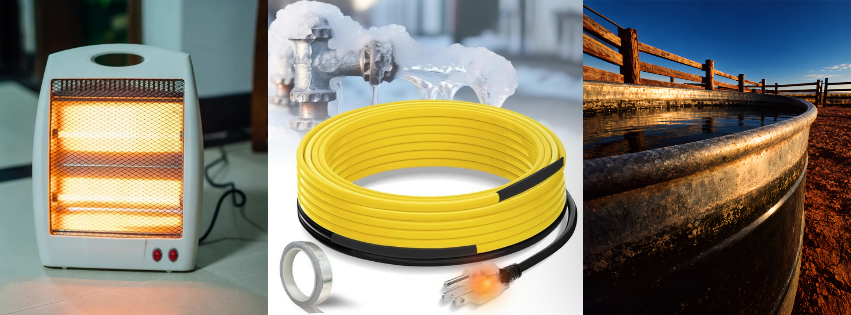
During the winter months, many people turn to plug-in heating devices for comfort and freeze protection. While these sources efficiently convert electricity to heat, they can become very expensive to operate because they use large amounts of electricity over time. Here are some things to remember:
Space Heaters and Electric Fireplaces
These appliances can be an economical choice when heating a single occupied room; however, they only save energy when they allow you to heat fewer spaces, not because the heater itself is more efficient.
| Efficient | Inefficient |
|---|---|
| Heating a small, occupied area. | Used as the primary heating source for multiple rooms or an entire home. |
| Used as a supplemental heating source. | Operated continuously in large, open spaces. |
| A thermostat on the device to prevent overheating and unnecessary energy use. |
Heat Tape (Heat Cable)
Heat tape is designed to prevent exposed water pipes from freezing during cold weather. The most efficient heat tape installation combines insulation with temperature-controlled heat tape.
| Efficient | Inefficient |
|---|---|
| Properly insulated pipes are paired with self-regulating heat tape. | Installed on uninsulated pipes. |
| Thermostatically controlled models are used. | Older models that run 24/7 regardless of temperature. |
Stock Tank Heater
Stock tank heaters are common on farms and acreages but can be among the largest seasonal plug-in electric loads. They must continuously replace heat lost from the water surface to cold air and wind.
| Efficient | Inefficient |
|---|---|
| Used with insulated or energy-efficient stock tanks. | Heating large volumes of water unnecessarily. |
| Wind protection is provided around the tank. | Used in uninsulated tanks exposed to wind. |
| Thermostatic controls are functioning properly. | Thermostats fail and allow continuous operation. |