Starting Oct 12, members may receive an email invitation to participate in a short survey. To learn more, click here.
Toll Free: (800) 214-2694 | Pay by Phone: (844) 965-1335
Toll Free: (800) 214-2694 | Pay by Phone: (844) 965-1335
Pay Now | Power Outages | Contact Us | Search

In the early morning hours of January 24, 2026, the Midcontinent Independent System Operator (MISO), issued a series of operational alerts to electric generation utilities and market participants. The alerts indicated that the electric grid was experiencing significant strain due to extreme temperatures, forced shutdowns of generation resources, low wind production, and transmission congestion related to Winter Storm Fern. As conditions worsened, MISO declared a Maximum Generation Event and issued public appeals for energy conservation to help preserve grid reliability and ensure continued service.
Although it was significant, the Maximum Generation Event wasn’t the only appeal for reduced electricity usage issued between mid-January and early February. Our power supplier, Dairyland Power Cooperative (DPC), issued six Peak Energy Alerts initiating energy management events, and members were asked to reduce their energy use to help manage power costs related to high system demand. Costs that may result in power cost adjustments on monthly electric bills
While both Maximum Generation Events and Peak Energy Alerts prompt us to appeal to members to reduce energy use, they are for different reasons. To understand the significance of energy management events, it’s important to know how the regional electric system works and how it drives the need for these events.
When you flip a light switch, electricity is available instantly—but behind that moment is a highly coordinated regional electric system operating across state lines. In much of the Midwest and South, that system is run by MISO.
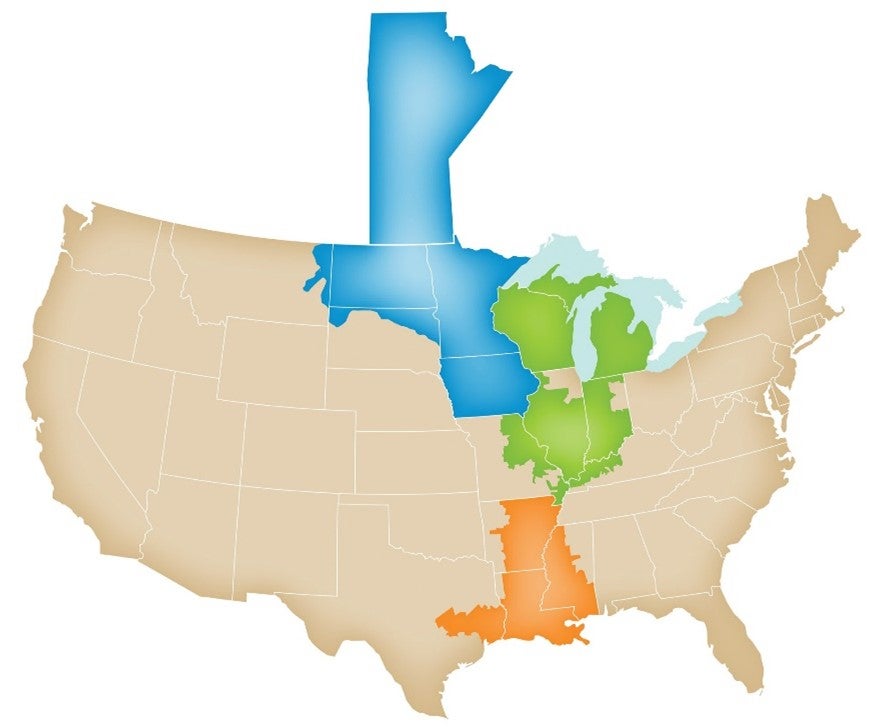
MISO is a nonprofit Regional Transmission Organization (RTO) approved by the Federal Energy Regulatory Commission. It coordinates electricity across 15 states and Manitoba, Canada, serving about 45 million people. MISO does not own power plants or transmission lines. Instead, utilities voluntarily place their high‑voltage transmission systems under MISO’s operational control so the grid can function as one integrated network.
Operating the Grid in Real Time
Electricity must be produced at the same moment it is used. MISO’s control rooms monitor the grid second by second, ensuring supply always matches demand. If a power plant unexpectedly shuts down or demand spikes during extreme weather, MISO immediately dispatches other generators and reroutes power to keep the system stable.
This regional coordination greatly improves reliability by allowing utilities to share resources instead of relying only on local generation.
How Electricity Is Bought and Sold
MISO also runs wholesale electricity markets. Power plants submit offers to sell electricity, and utilities submit bids to buy it. MISO selects the lowest‑cost mix of resources that can reliably meet demand, producing prices that reflect real‑time system conditions.
MISO operates:
Once a utility joins MISO as a transmission owner, all power generation is offered into the MISO market and all electricity for customers is purchased from it. Utilities can no longer simply run their own power plants to serve their own load.
Planning for the Future
Beyond daily operations, MISO plans the grid 10–20 years ahead, identifying where new transmission lines are needed to maintain reliability, reduce congestion, and support new resources like wind, solar, and electrification.
Why the Regional System Matters
The regional electric system delivers:
Though largely invisible, the regional electric system plays a critical role in keeping electricity reliable, affordable, and ready for the future.
Peak Energy Alerts and Maximum Generation Events are tools used by DPC and MISO to help manage the regional electric grid. Although the messaging may seem similar, they are triggered by different circumstances and can result in different actions.
Peak Energy Alerts are issued by DPC when there is high demand for electricity on the regional grid driving wholesale market prices above ‘normal.’ These alerts are primarily intended to help manage power costs and reduce the impact of high market prices that are passed on to members.
Many of these alerts coincide with periods of extreme temperatures, when electric use increases; however, economic factors can also play a role. Typically, advanced notice of an hour or two is provided, allowing time for the Cooperative to notify members enrolled in energy management programs, as well as encourage all members to conserve energy wherever possible. The following table explains how Peak Energy Alerts affect our energy management programs:
| Winter Season | Summer Season | Economic Control | |
| Dual Fuel / AC Cycling | Events generally occur 7:00 to 11:00 a.m. with a maximum of seven events total with a minimum of one per month in December, January, and February | Events generally occur 2:00 to 6:00 p.m. with a maximum of nine events total and minimum of one per month in June, July, and August | Events can occur year-round between 5:00 to 8:00 p.m. when market prices exceed calculated thresholds. These events will not occur during an already-issued peak energy event day. |
| Commercial & Industrial Generators – Controllable Seasonal Rate | Events generally occur 5:00 to 8:00 p.m. with a maximum of seven events total with a minimum of one per month in December, January, and February | Events generally occur 2:00 to 6:00 p.m. with a maximum of nine events total and minimum of one per month in June, July, and August |
A Maximum Generation Event is issued by MISO when the supply of electricity within the system is at risk of not meeting consumer demand. During these events, electric utilities are asked to reduce demand to support grid reliability, such as controlling electric water heaters and other devices enrolled in energy management programs. Members are also asked to reduce all non-essential electricity use to help stabilize the system and avoid more serious reliability measures. In rare cases, when demand threatens to outpace supply, the regional grid operator may call for temporary, controlled outages – often referred to as rolling blackouts – to prevent broader system failures. These measures are used only as a last resort and are uncommon in Minnesota.
During the Maximum Generation Event in January, widespread extreme cold temperatures, coal and gas-powered generation resources that were unable to operate, and low wind production placed significant strain on the grid. Additionally, transmission lines hit capacity and restricted electricity flow between regional grid operators limiting the ability to move electricity where it was needed most. This highlights the importance of continued investment in additional transmission capacity to strengthen the grid and improve reliability, especially during extreme conditions.
Grid Reliability
Grid reliability is at the forefront of strategic planning for electric utilities across the country. Concerns stem from a combination of issues including demand rising faster than infrastructure can be built; generation shifting from traditional, dispatchable resources (i.e., coal and gas plants) to variable renewables (i.e., wind and solar); and an aging transmission system that was not designed for today’s patterns of electricity use and power flows.
The North American Electric Reliability Corporation (NERC) recently issued a new Long-Term Reliability Assessment which finds that the MISO region, including Minnesota, faces elevated reliability risks as the demand for electricity grows and existing power plants retire. According to the report, expected growth in demand for electricity is outpacing the addition of new generation resources. At the same time, base load power plants that provide consistent, around-the-clock electricity continue to retire.
As the demand for electricity increases in the MISO region, greater flexibility in the transmission system is needed to move power efficiently to where it is needed most. During the Maximum Generation Event in January, and in the days surrounding it, MISO and Pennsylvania – New Jersey – Maryland Interconnection (PJM), another regional transmission operator, were impacted by congestion on the transmission system due to damage and demand caused by Winter Storm Fern. This meant that power couldn’t move easily between the systems to balance the needs of each. Events such as this are why MISO is investing billions of dollars in system upgrades and new transmission lines such as the MariBell Project.
Ultimately, this extreme winter event served as a reminder that grid reliability is not something we can take for granted. Maintaining a dependable electric system requires long-term planning, infrastructure investment, and collaboration and coordination among utilities, grid operators, regulators, and consumers. As demand grows and the resource mix continues to evolve, the grid will continue to face new challenges. But with ongoing investments in transmission upgrades, thoughtful resource planning, and active participation from our members, we can meet those challenges head on. Together, we can help strengthen the grid and support a dependable power supply for years to come.